Why Ackermann geometry
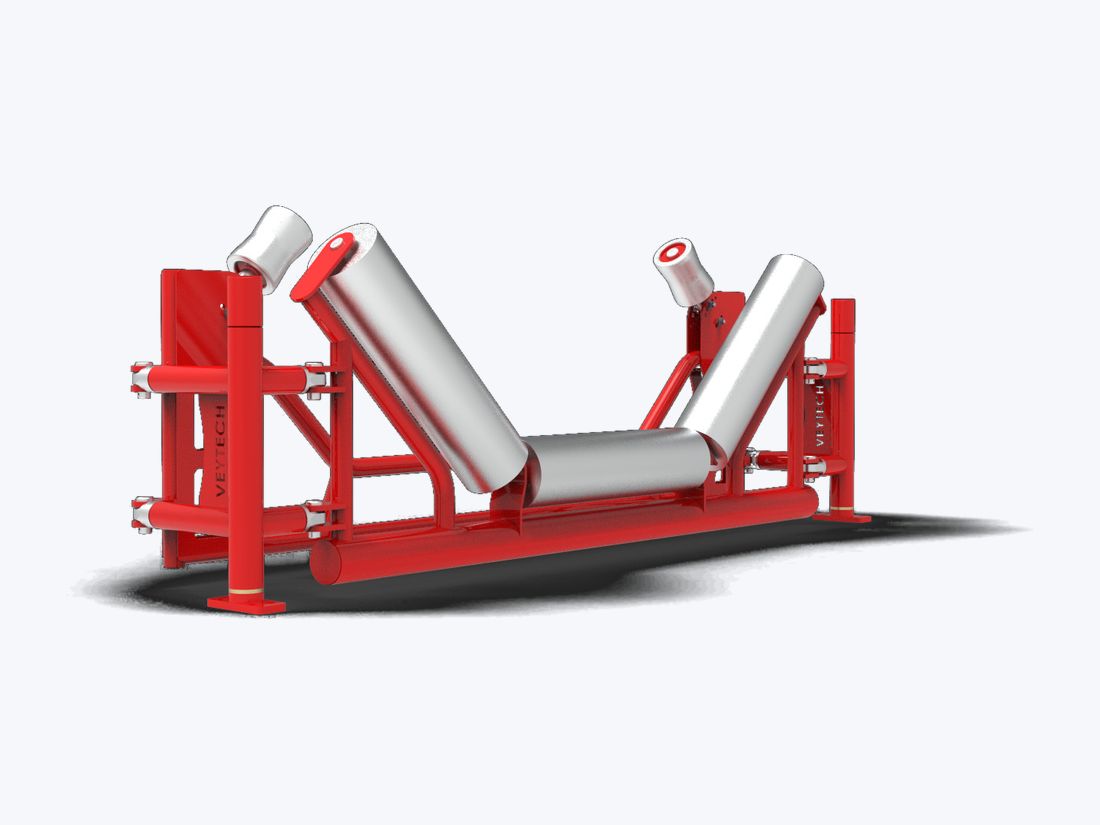
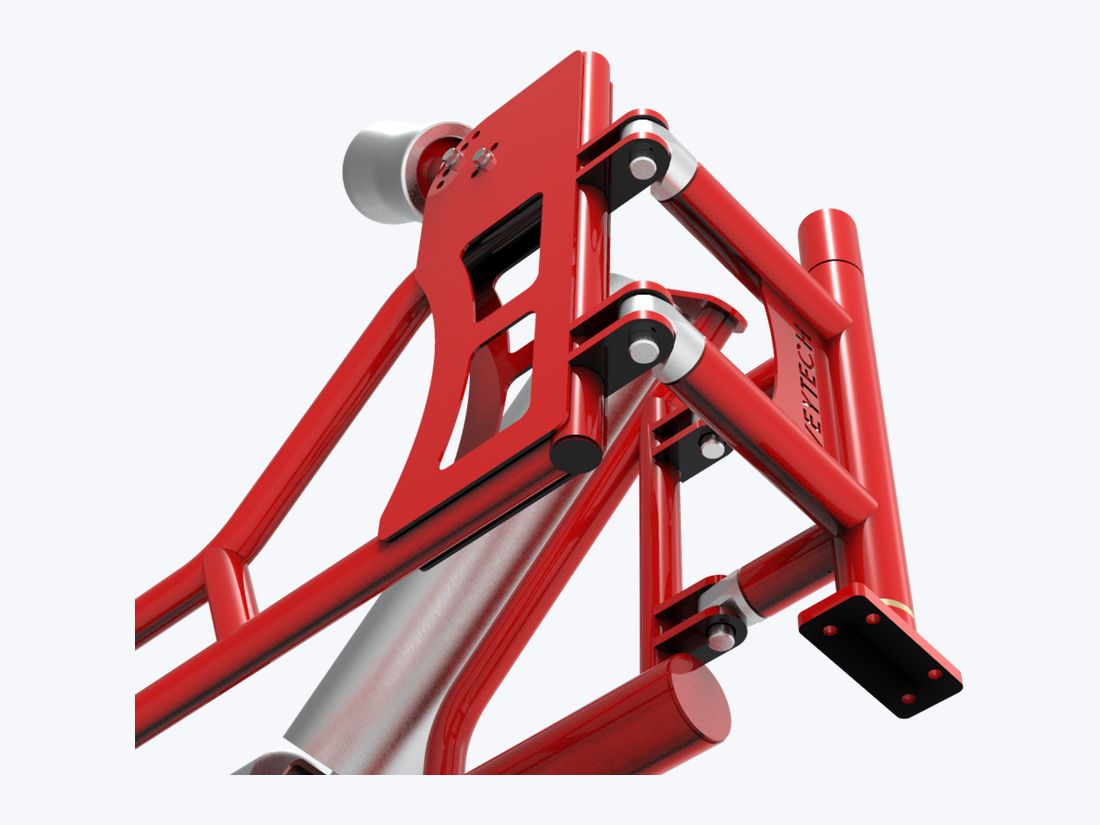
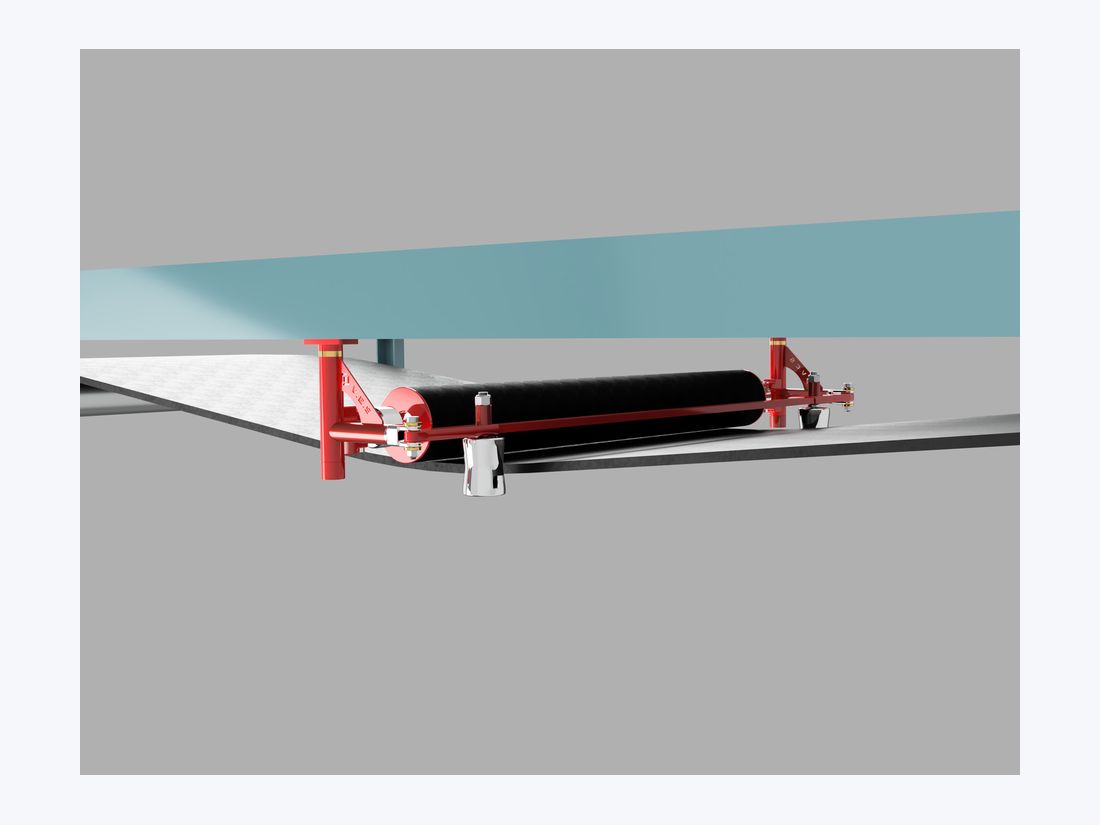
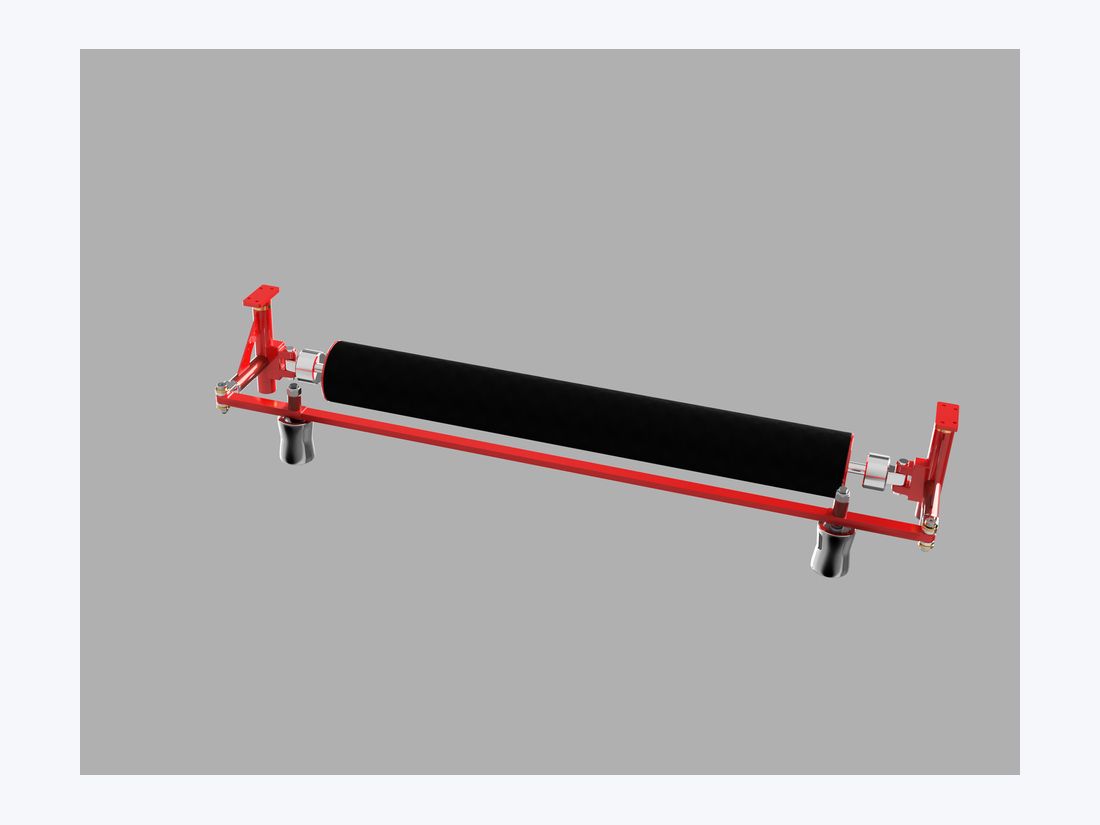
Conventional tracking frames pivot on a single centre bearing that carries the whole load. Under mining tonnages that bearing seizes or collapses and the frame stops steering. Trackermann uses the Ackermann steering geometry first applied to horse carts in 1878 and later to motor cars: a five-pivot assembly with 28° of rotation that spreads the load across two main stanchions, so the frame keeps responding to belt wander for its whole life.
Trough Tracker
- Direct replacement for standard 3, 4 or 5-roller trough idler frames.
- Rubber-lagged rollers give swift, precise realignment of a misaligned belt.
- No centre-pivot bearing to fail; load carried on two stanchions.
Return Tracker
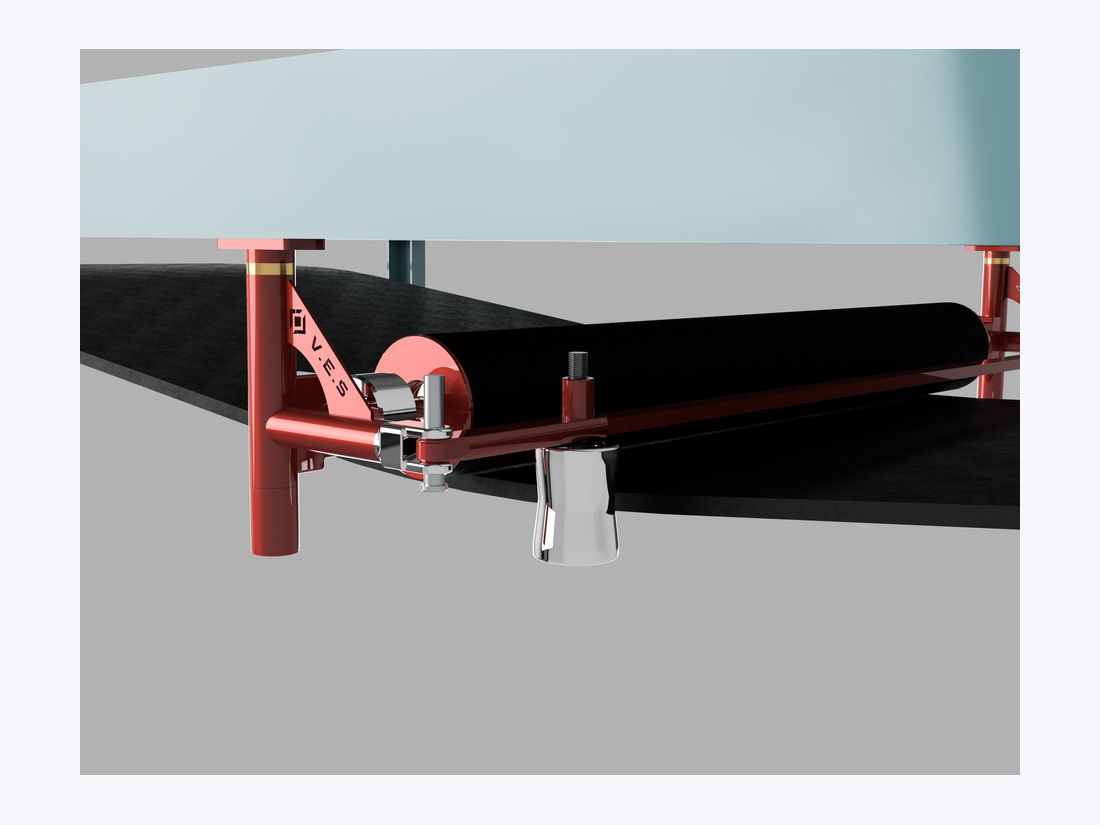
Mounted on the dirty side of the return belt, using the same five-pivot geometry for effective tracking control on the return strand.
CleanTrax
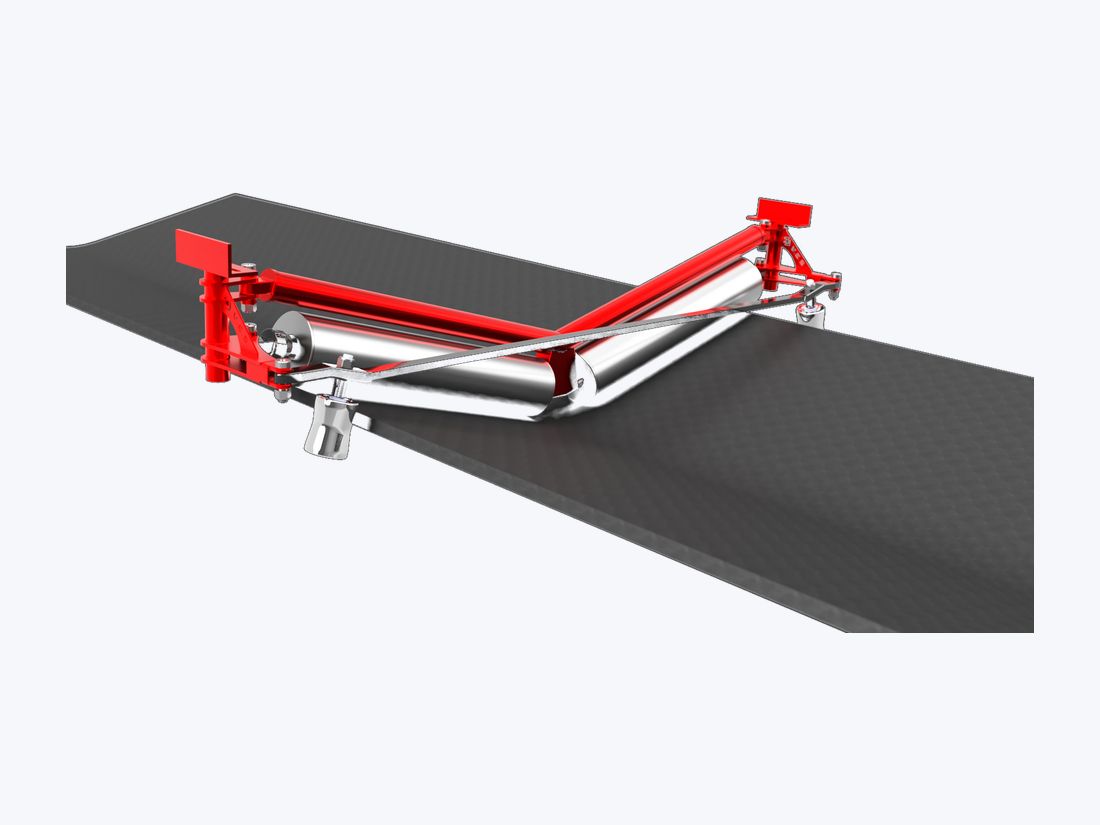
Mounted on the clean side of the belt and acting like a pressure roller, so it can be run at higher tension. Best positioned 10–15 metres before the tail pulley.
Selection
| Belt width | To suit; specify belt width and trough angle |
| Fitment | Replaces existing frame on the same base |
| Rollers | Rubber-lagged, sized to the idler set |
Common questions
What is a belt tracking frame? A belt tracking frame (also called a belt tracker, training idler or self-aligning idler) is an idler frame that pivots when the belt runs off centre and steers it back. Trackermann frames pivot on five points instead of one centre bearing, so they keep steering under mining loads.
Why does a conveyor belt wander? Off-centre loading, worn or seized idlers, a misaligned pulley, build-up on rollers and structure that is out of square all push a belt sideways. A tracking audit finds the cause; tracking frames keep the belt centred while it is fixed, and protect skirts and structure in the meantime.
Can Trackermann replace my existing trough idler frames? Yes. The Trough Tracker is a direct replacement for standard 3, 4 and 5-roller trough idler frames on the same base. Tell us the belt width and trough angle.
Do you supply conveyor tracking systems Australia-wide? Yes. Trackermann tracking frames are designed and manufactured in New South Wales and supplied to mines, quarries and ports in Western Australia, Queensland, Tasmania, South Australia, Victoria and the Northern Territory. Conveyor tracking solutions start with a tracking audit if the cause of the wander is not obvious, then the right mix of Trough Tracker, Return Tracker and CleanTrax frames.